Smartphone Security

  • Subscribe to our RSS feed.
  • Twitter
  • StumbleUpon
  • Reddit
  • Facebook
  • Digg

Saturday, 11 May 2013

BandWidth Explained

Posted on 04:16 by Unknown

BandWidth Explained
Most hosting companies offer a variety of bandwidth options in their plans. So exactly what is bandwidth as it relates to web hosting? Put simply, bandwidth is the amount of traffic that is allowed to occur between your web site and the rest of the internet. The amount of bandwidth a hosting company can provide is determined by their network connections, both internal to their data center and external to the public internet.
Network Connectivity

The internet, in the most simplest of terms, is a group of millions of computers connected by networks. These connections within the internet can be large or small depending upon the cabling and equipment that is used at a particular internet location. It is the size of each network connection that determines how much bandwidth is available. For example, if you use a DSL connection to connect to the internet, you have 1.54 Mega bits (Mb) of bandwidth. Bandwidth therefore is measured in bits (a single 0 or 1). Bits are grouped in bytes which form words, text, and other information that is transferred between your computer and the internet.

If you have a DSL connection to the internet, you have dedicated bandwidth between your computer and your internet provider. But your internet provider may have thousands of DSL connections to their location. All of these connection aggregate at your internet provider who then has their own dedicated connection to the internet (or multiple connections) which is much larger than your single connection. They must have enough bandwidth to serve your computing needs as well as all of their other customers. So while you have a 1.54Mb connection to your internet provider, your internet provider may have a 255Mb connection to the internet so it can accommodate your needs and up to 166 other users (255/1.54).


Traffic

A very simple analogy to use to understand bandwidth and traffic is to think of highways and cars. Bandwidth is the number of lanes on the highway and traffic is the number of cars on the highway. If you are the only car on a highway, you can travel very quickly. If you are stuck in the middle of rush hour, you may travel very slowly since all of the lanes are being used up.

Traffic is simply the number of bits that are transferred on network connections. It is easiest to understand traffic using examples. One Gigabyte is 2 to the 30th power (1,073,741,824) bytes. One gigabyte is equal to 1,024 megabytes. To put this in perspective, it takes one byte to store one character. Imagine 100 file cabinets in a building, each of these cabinets holds 1000 folders. Each folder has 100 papers. Each paper contains 100 characters - A GB is all the characters in the building. An MP3 song is about 4MB, the same song in wav format is about 40MB, a full length movie can be 800MB to 1000MB (1000MB = 1GB).

If you were to transfer this MP3 song from a web site to your computer, you would create 4MB of traffic between the web site you are downloading from and your computer. Depending upon the network connection between the web site and the internet, the transfer may occur very quickly, or it could take time if other people are also downloading files at the same time. If, for example, the web site you download from has a 10MB connection to the internet, and you are the only person accessing that web site to download your MP3, your 4MB file will be the only traffic on that web site. However, if three people are all downloading that same MP at the same time, 12MB (3 x 4MB) of traffic has been created. Because in this example, the host only has 10MB of bandwidth, someone will have to wait. The network equipment at the hosting company will cycle through each person downloading the file and transfer a small portion at a time so each person's file transfer can take place, but the transfer for everyone downloading the file will be slower. If 100 people all came to the site and downloaded the MP3 at the same time, the transfers would be extremely slow. If the host wanted to decrease the time it took to download files simultaneously, it could increase the bandwidth of their internet connection (at a cost due to upgrading equipment).


Hosting Bandwidth

In the example above, we discussed traffic in terms of downloading an MP3 file. However, each time you visit a web site, you are creating traffic, because in order to view that web page on your computer, the web page is first downloaded to your computer (between the web site and you) which is then displayed using your browser software (Internet Explorer, Netscape, etc.) . The page itself is simply a file that creates traffic just like the MP3 file in the example above (however, a web page is usually much smaller than a music file).

A web page may be very small or large depending upon the amount of text and the number and quality of images integrated within the web page. For example, the home page for CNN.com is about 200KB (200 Kilobytes = 200,000 bytes = 1,600,000 bits). This is typically large for a web page. In comparison, Yahoo's home page is about 70KB.


How Much Bandwidth Is Enough?

It depends (don't you hate that answer). But in truth, it does. Since bandwidth is a significant determinant of hosting plan prices, you should take time to determine just how much is right for you. Almost all hosting plans have bandwidth requirements measured in months, so you need to estimate the amount of bandwidth that will be required by your site on a monthly basis

If you do not intend to provide file download capability from your site, the formula for calculating bandwidth is fairly straightforward:

Average Daily Visitors x Average Page Views x Average Page Size x 31 x Fudge Factor

If you intend to allow people to download files from your site, your bandwidth calculation should be:

[(Average Daily Visitors x Average Page Views x Average Page Size) +
(Average Daily File Downloads x Average File Size)] x 31 x Fudge Factor

Let us examine each item in the formula:

Average Daily Visitors - The number of people you expect to visit your site, on average, each day. Depending upon how you market your site, this number could be from 1 to 1,000,000.

Average Page Views - On average, the number of web pages you expect a person to view. If you have 50 web pages in your web site, an average person may only view 5 of those pages each time they visit.

Average Page Size - The average size of your web pages, in Kilobytes (KB). If you have already designed your site, you can calculate this directly.

Average Daily File Downloads - The number of downloads you expect to occur on your site. This is a function of the numbers of visitors and how many times a visitor downloads a file, on average, each day.

Average File Size - Average file size of files that are downloadable from your site. Similar to your web pages, if you already know which files can be downloaded, you can calculate this directly.

Fudge Factor - A number greater than 1. Using 1.5 would be safe, which assumes that your estimate is off by 50%. However, if you were very unsure, you could use 2 or 3 to ensure that your bandwidth requirements are more than met.

Usually, hosting plans offer bandwidth in terms of Gigabytes (GB) per month. This is why our formula takes daily averages and multiplies them by 31.


Summary

Most personal or small business sites will not need more than 1GB of bandwidth per month. If you have a web site that is composed of static web pages and you expect little traffic to your site on a daily basis, go with a low bandwidth plan. If you go over the amount of bandwidth allocated in your plan, your hosting company could charge you over usage fees, so if you think the traffic to your site will be significant, you may want to go through the calculations above to estimate the amount of bandwidth required in a hosting plan.
Read More
Posted in BandWidth, Explained | No comments

Friday, 10 May 2013

Golden Monkey

Posted on 00:26 by Unknown

Golden Monkey
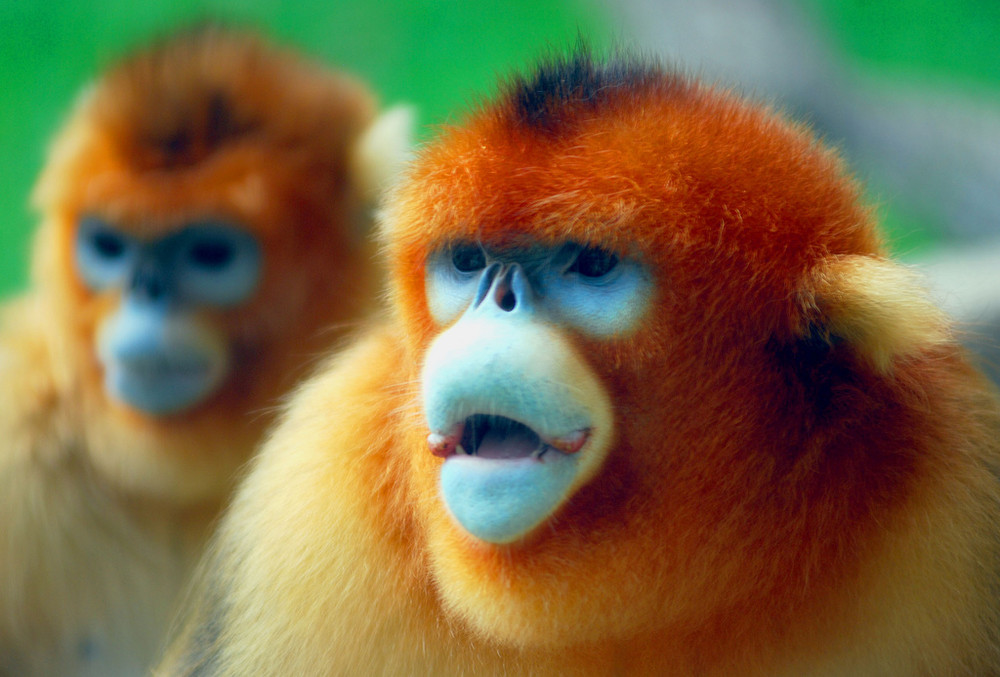
The Golden Monkey is a subspecies of the Blue monkey (or Sykes monkey). As a result of continuous divisions of forests, Cercopithecus species were isolated in different regions and therefore forced to adapt to these regions.  The golden monkey is said to have diverged from Cercopithecus mitis during these isolation events (it is one of 8 subspecies of Cercopithecus mitis), and is now endangered. Because it has been seldom studied, little is known about the golden monkey, its behavior and ecology.

Physical Characteristics 
Golden monkey males have a reddish color on their back and on the dorsal part of their sides as well as some grizzled darker patches. Females are lighter in color and have less grizzled brown patches.


Behavior 
Golden monkeys live in groups of between 30-80 individuals, usually led by one adult male. The female defends her territory, while males stay for a certain period of time after which they leave the group. These males are in the position to copulate with every female in the group; however it is the females that solicit the males. These monkeys use a series of different calls to express themselves. Males use calls to communicate territoriality and fighting, females to display group cohesion, and alertness, and subadults to display
submissiveness, and to stimulate mobbing behavior. They also communicate using visual expressions.

Diet 
Golden monkeys eat about 20 to 30 plant species. They mostly rely on leaves, fruits, and invertebrates, but their main preference is bamboo.


Caring for the Young 
Golden Monkeys breed seasonally and have a gestation period of 5 months. They give birth to a single offspring that is born with all its fur and with its eyes open. The female eats the placenta, and then cleans the baby by licking it. After the first few months, the female nurses the offspring less, and stops once a new offspring is born usually 2 years later. Male offspring become independent of the group when they reach sexual maturity.

Predators 
Humans are the main predators, as they encroach onto the golden monkeys’ habitat, set snares, and illegally cut down bamboo.
Read More
Posted in golden, Monkey | No comments

Wednesday, 8 May 2013

Dragon Fly Facts

Posted on 04:01 by Unknown

Dragon Fly Facts
Source:  http://creativecommons.org/licenses/by-sa/2.5/deed.en
Dragonflies can be found in almost any wetland area. They are large, beautiful insects that come in a variety of sizes and colors. Dragonflies belong to the insect order Odonata, which means “toothed ones.” They received this name because their jaws have toothlike ridges. They are one of the oldest known insects. Fossils have been found that are more than 300 million .
1. Despite their name, dragonflies are not related to common flies. In fact, they are part of an entirely different order of insects. Dragonflies are part of the Odonata order, which also includes damselflies.
2.Worldwide, the Odonata order of insects (dragonflies and damselflies) includes more than 5,000 individual species. They exist in many countries around the world. Within the United States, there are about 400 species of Odonata.
3. You often see dragonflies near bodies of water (ponds, lakes and slow-moving streams) because they lay their eggs on or near the water.
4.Dragonfly young (nymphs) have a special appendage on their head that they use as a spear to catch small fish. They are predatory insects from birth.
5. Dragonflies are not born with wings. They are born in a larvae state and eventually go through a partial metamorphosis process, during which they grow their wings.
6.Dragonflies spend most of their lives in the larva stage (up to three years, depending on the species). The adult, winged stage only lasts a few weeks. Mating is the primary reason for their winged stage. So when you see a winged dragonfly, you know it's toward the end of its lifespan, Sad but true.
7.Male dragonflies can be very territorial, staking claim to a particular area alongside a pond or stream. When you see two adults chasing each other through the air, it is often one male chasing another from its territory.
8.When you see two dragonflies flying through the air attached to one another, it is almost always a male and female mating.
9.Dragonflies will sometimes travel in swarms, which may be related to weather changes such as the passage of cold fronts.
10.Dragonflies prey on other creatures through their entire life cycle. As larva in bodies of water, they prey on other small creatures (mosquito larva, tiny fish, etc.). As adults, they eat other flying insects.
11.Dragonflies can be useful in controlling mosquito populations. Mosquitoes are one of their primary food sources!
12.Dragonflies are ancient insects. They have existed on Planet Earth for approximately 300 million years. Today, they look very much like they did in "dinosaur times," though they have gradually gotten smaller since then.
13.The largest dragonfly fossil (one of the earliest) had a wingspan of nearly three feet. That makes it the largest flying insect in known history.
14.Dragonflies have two pairs of wings. The wings are mostly transparent and move very fast, so it often appears that they have more than two pairs.
15.The front wings of the dragonfly are slightly longer than the rear wings. This helps with both speed and maneuverability.
16.Though many people fear them, dragonflies cause no harm to humans whatsoever. They are often curious toward humans and will fly around you for that reason, but they do not sting or bite.
17.Though dragonflies are essentially harmless to humans, there were many spooky legends about them in the past (some of which still remain). For example, people used to believe that sleeping outside put you at risk of having your eyes sewn shut by the dragonfly or "darning needle."
18.One of the most distinguishing features of dragonflies are their eyes. They have large, compound eyes with many facets or sides. Because of their large, multifaceted eyes, the adult dragonfly can see nearly 360 degrees around it at all times.
19.Though you can't see them all with the naked eye, the compound eyes of the dragonfly can contain thousands of tiny lenses.
20.As far as insects go, dragonflies are among the fastest. Some of the faster species can fly upward of 30 miles per hour. Their four wings also allow them to move sideways, backward, to hover in place, etc. And they can do all of these movements quickly and accurately, which makes them well suited to eat other insects right out of the air.
21. The process of transforming from larva to adult is called metamorphosis.
22. Dragonflies can fly backwards and hover like a helicopter.  Dragonflies beat their wings about 30 times per second.
23. Like all insects, dragonflies have three body parts. An adult dragonfly has a pair of compound eyes on its head. Each eye may contain as many as 28,000 lenses. Behind the head is the thorax. It connects three pairs of legs and two pairs of large wings. The average wingspan is 1 to 3 inches. The thorax connects to the abdomen, which is long, slender, and segmented.
Read More
Posted in Dragon, facts, Fly | No comments

Sunday, 5 May 2013

How To Increase Your I.Q

Posted on 04:48 by Unknown

How To Increase Your I.Q
Source:https://creativecommons.org/licenses/by-sa/3.0/deed.en
Curious about your IQ or intelligence quotient?  There are so many different IQ tests that you can take online. They shall provide you with varying questions and some really takes too hard to answer while some are just easy and comprehensible. Have you ever wondered where this IQ thing originated? Well, to give you an idea, the “IQ” term was coined during 1912 by William Stern, a German psychologist. This was formulated as a method to measure children’s’ intelligence.

You may not realize it that much but IQ is very vital both on a personal and professional standpoint. When it comes to the process of recruitment of companies, your IQ definitely can play an advantageous part when you apply. The higher your IQ level, the better the chance for you to answer random questions and analyze different situations. There are different practices that you can do in order to stretch your mental muscles.
Below are some techniques to help increase you’re I.Q:

1. Education is Key. If you are still studying, make sure that you get the best education that you can have. If not, then try to develop different hobbies that you can do daily to flex your mind. Solve logic problems, crossword puzzles and jigsaw puzzles. Learning each day even just a single new thing can be vital to widen your knowledge.

2. Watch What You Eat. You might think about how does eating affect my IQ? Well, the answer is that if you maintain a balanced diet, your brain chemistry becomes more stabilized and you will be able to think in a more efficient manner. It has been said that there are some foods that can help increase brain wave speed. Eat on a regular basis; it keeps your mind active.

3. Don’t Drink Too Much Alcohol. Dying brain cells can be caused by excessive alcohol consumption. When these brain cells die, they shall never grow back. If you need to watch what you eat, you also need to watch what you drink. Keep in mind that your brain functions much better when you are on the right state of mind.

4. Classical Music. Different studies have indicated that listening to classical music can help improve the brain’s spatial IQ. Though this is still controversial, listening to this type of music won’t make you stupid as well. It can probably help in providing a relaxed atmosphere for your brain.

5. Sleep Appropriately. Provide your brain with 7 to 8 hours of sleep each night. It can help the brain become more organized. The brain is more active when asleep, according to studies, it processes short-term memories and files them for long term storage.

6. Challenge Your Mind. Try to regularly test yourself by solving different situations. Ask “what if?” Be more curious and more analytical of everything that you do. This can assist in turning your lazy mind into a more active one. The more it is active, the more you can handle and find solutions on different questions or situations.

7.  Write .When you write down your thoughts, it can be a great tool for you to reflect and make decisions. Some people use journals to write down their thoughts, others have simple notepads or notebooks. Simply writing what you think and feel can help you have a new perspective when you go back and read those words.

8.  Meditate .As already stated, you can significantly boost your IQ through meditation. It may not seem logical, that you could boost your IQ by thinking about nothing at all, but it does help you bridge a connection from your conscious to your subconscious mind. And the subconscious stores every bit of data of our lives. Nothing is lost to the subconscious.

9.  Be active .If you’re not already active, start a regular exercise routine. Having a healthy body also affects the mind.

10. Have Hobbies .Have a regular routine of doing things you love to do, whether it’s fishing, bowling, bicycling, knitting, or reading a mystery novel. The more fun and passion you experience, the easier it will be to process and assimilate new information.

These techniques can definitely help you boost your IQ, no matter who you are. 

Read More
Posted in How, I.Q, Increase, To, your | No comments

Amazing Ant Facts

Posted on 03:48 by Unknown

Amazing Ant Facts
Source:  http://creativecommons.org/licenses/by-sa/3.0/deed.en
1. Australia’s biggest and most primitive ants, the Bulldog Ants (or jumper ants), live in the bases of epiphytic ferns in the rainforest canopy and forage on tree trunks at night.

2. Other ants live in crevices in trees, like the Bumpy Satinash. The tree benefits from nutrients which the ants bring in.

3. Ants eat many seeds , especially those of eucalypts.

4. Attached to the seeds of some plants is a nutrient-rich food parcel called an elaiosome. The ants to carry the seeds back to their nests, eat the elaiosome and discard the seed.

5. The seeds germinate safely in the ants’ nutrient-reach waste heap.

6. Acacias and other plants have small nectar-producing glands on their branches. These ‘nectaries' attract ants which then protect the trees from attack from other insects.

7. Many ants smear themselves with a substance which is an antibiotic to prevent disease breaking out in their colonies.

8. If a pollen grain comes into contact with this substance, it dies quickly, so ants are generally not good pollinators.

9. Colonies are extended families and the members are all children of one queen.

10. Ants depend upon a complex social structure for survival. An individual ant cannot survive without its colony.

11. Ants have lived on the Earth for more than 100 million years and are found in almost every terrestrial habitat. They are most abundant in tropical ecosystems.

12. Ants evolved from wasps.

13. Ants smell with their antennae. They use their antennae to pick up scents in the air, stroke other ants, tap the ground, and examine pieces of food.

14. Ants can hear with their legs. Organs on the legs, antenna, thorax and head respond to sound vibrations moving through the ground.

15. Ants communicate by touch. Tapping, stroking and dancing deliver simple messages.

16. Ants are near-sighted. Their compound eyes are made of tiny lenses that easily detect movement, but they can only see images clearly when they looks at things close-up.

17. Ants defend their homes by biting, stinging, or spraying intruders with chemicals.

18. Ants “talk” with chemicals. They have 10 – 20 chemical “words,” which allow them to identify ants from their own species, to attract other ants to sources of food, and to raise an alarm call in case of danger.

19. Some ants build mounds with a longer southern slope to increase solar energy collection. The slopes are so consistently oriented that for centuries they were used as compasses by people in the Alps.

20. Some workers are responsible for nest hygiene. They move pupae covers, remnants of foraged insects and dead ants to refuse piles far from the nest.

21. Ants make antibiotics. A “metapleural” gland, unique to ants, secretes an antibiotic that prevents bacteria and fungi from invading and infecting the colony.

22. Ants can walk upside down. Each foot has two hooked claws, which dig into surfaces and let ants climb trees and walk on the undersides of leaves.

23. Ants are very neat and clean. Their mouths have combs to clean their front legs and their front legs have combs to clean their back legs and antennae.

24. Ants have social stomachs. They store liquid food in an expandable pouch called a crop. Food is often regurgitated from the crop and shared with nestmates. A worker can induce a nest mate to provide liquid food by touching the other ant’s head using its foreleg.

25. Ants make high-pitched sounds by rubbing a thin scraper on their waist against ridges on their abdomen.
This type of communication is called stridulation, and it is barely audible to humans.

26. An ant’s skeleton is on the outside. A hard, shell-like covering protects the internal organs and supports muscles.

27. Ants do not have lungs. Air tubes branch out to all parts of the body. Oxygen enters and C02 exits through tiny openings on the sides of the body.

28. Ants have tiny brains. A nerve cord connects the brain to the thorax and abdomen. From the cord, nerves branch out to the entire body.

29. Ants have simple hearts, which consist of a tube that runs from the head to the end of the abdomen. Muscles force colorless blood forward in the tube where it empties out near the brain.

30. When an ant dies it simply falls over. Nest mates ignore it until decomposition begins. Then they pick it up, carry it out of the nest and drop it on a refuse pile.

31. An ant’s worst enemy is another ant. They are aggressive and attack other ant colonies. In most cases, ants from different colonies, even within the same species, treat each other as enemies.

32. Some ant colonies have huge wars in which thousands of ants rip one another to pieces. The winners invade the defeated colony and carry off the young to eat. An ant’s jaws are used to hold the legs or antennae of an enemy ant while nest mates tear the victim apart.

33. Some ants don’t have stingers. They may spray poison from the tip of the gaster or release an insect repelling substance that is thick and gluey.

34. Ants are strong. They can carry food 5x greater than their own weight or drag prey items 25x heavier.

35. Ants like hot and humid climates. They function poorly below 68°F (20°C) and not at all below 50°F(10°C).

36. Most colonies have one queen, but some species have multiple queens.

37. Worker ants are all female. They do all the jobs necessary to keep a colony alive except egg laying. Workers may live from less than one year to more than five years. Male ants don’t do any work in the colony. They live a short time and their only function is to mate with young queens.

38. The colony is organized vertically within a nest by age and life stage. Younger ants are found at the bottom of the nest, taking care of the queen and her brood. Older ants take care of food stores and expand upper chambers, while the oldest ants are sent out of the nest to forage for food.

39. Individual workers only live a short time, but a single colony can survive up to 30 years as long as its queen is alive and laying eggs.

40. Dracula ants suck the blood of their larvae. And it doesn’t even hurt them.
Read More
Posted in Ant, facts | No comments

Saturday, 4 May 2013

Foxy Facts

Posted on 04:02 by Unknown

Foxy Facts
Source:https://creativecommons.org/licenses/by/3.0/deed.en
The red fox is a wild cousin of the domestic dog. He’s the most successful wild predator in the world, more widespread than any other carnivore. Foxes rule in Europe, North America, throughout Asia and even in Australia, where they only arrived about 150 years ago.

1. Foxes are fantastically STINKY - especially their poo, which can smell as bad as a skunk.

2. Foxes need a huge amount of SPACE to roam and hunt for food in order to stay healthy. A walk in the park wouldn’t be enough for a fox.

3. Foxes are fantastically NOISY -especially the females, who make a scratchy screaming noise that sounds really spooky and keeps you awake at night.

4. Foxes love DIGGING. If you left a fox alone in your house, it could dig right through your sofa, just for fun.

5. Foxes need FREEDOM. They are wild creatures, and can get very depressed when kept in captivity.

6. In the film, Farmers Boggis, Bunce and Bean hate Fantastic Mr Fox because he keeps stealing their chickens. In actual fact, it is true that only a few daring foxes commit most of the chicken “crimes” that make farmers angry - perhaps they’re more cunning than the other foxes, or perhaps they just get a taste for chicken.

7. In the UK, wild foxes live mainly on a diet of rabbits. And which animal causes the most damage for farmers? Yes, that’s right - rabbits. They cost farmers a whopping £100 million a year, just by eating their crops. So the fox could even be the farmer’s friend, saving him money by keeping the rabbit population down!

8. Foxes seem to be good at avoiding hard work - especially when there’s someone else to do it for them. Instead of bothering to dig their own den, they sometimes steal a badger’s burrow (called a sett) by scaring the owner away and making his house smell so bad he doesn’t want it back.

9. Foxes seem to be very playful. They can often be seen playing with a fallen apple as though it were a ball, or chasing their own tails. This fooling around sometimes serves a second purpose: if a curious rabbit comes closer to watch, it will find itself gobbled up by the hungry fox.

10. Foxes are incredibly adaptable. They make the best of whatever situation they find themselves in, whether it’s the countryside or the centre of a big city. They really are a pretty fantastic success as a species.

11. For every animal is a scientific name and classification. The scientific name of the red fox is Vulpes vulpes. Classification is based on kingdom, phylum, class, order, family, genus, and species. Every category narrows down the type of living thing we are talking about.

12. The classification of the red fox is:
Kingdom: Animalia 
Phylum or Division: Chordata  
Class: Mammalia 
Order: Carnivora 
Family: Canidae 
Genus: Vulpes 
Species: vulpes 

The kingdom tells us that it is an animal,  and then  the phylum provides the information that it is a vertebrate or an animal with a back bone. The order states that it is a carnivore. Then we  are told  the family, genus, and species.  Canidae  is the family that includes  the coyotes, dogs, foxes, jackals, and wolves. Vulpes  is the genus of the foxes, and  vulpes  is the species, which tells you  the exact type of animal. The red fox is mostly nocturnal, coming out only rarely during the day.

13. The red fox uses an uncommon skill to hunt its prey. Unlike other mammals, the red fox can hear low-frequency sounds. This is an advantage for the fox because it can hear small animals digging underground; it then knows where to dig in the dirt or snow to catch prey.  Like cats, the fox stalks its victims. It quietly gets as near as it can to them, and then the fox pounces.

14. The red fox is an omnivore and it eats fruit, berries and grass. However, a major part of the red fox's diet consists of insects like crickets, caterpillars, grasshoppers, and beetles. The red fox hunts even after it is full. It then hides extra food it finds and saves it for later under leaves, snow or dirt.

15. The red fox also preys on birds and rodents such as squirrels, mice, and rabbits.

16. The mating season for the red fox mates is from January to the end of March.Right after mating, the female will make one main den and maybe a couple other dens. These extra dens are made for use in case the main den is disturbed. The fox dens may be as long as 50 feet.

17. About two months after the mating, the female becomes mother to a litter of between one and ten kits.

18. While the mother is taking care of the kits, the male red fox hunts for the food. The kits stay inside the den until they are one month old. Once the kits are old enough to play outside the den, they are old enough for semi solid food. At first, the mother feeds them regurgitated meals. Later, she brings home live food for dinner so that the kits can "play" with the prey; this experience gives the young foxes the skill they will need for hunting on their own. The kits are old enough to live on their own after seven months

18. The male cubs normally leave before the female cubs; however, not every cub chooses to leave their parents. Only the females are allowed to stay with the family, the males must strike out on their own and start a family.

19. The male cubs normally leave before the female cubs; however, not every cub chooses to leave their parents. Only the females are allowed to stay with the family, the males must strike out on their own and start a family.

20. Red foxes usually live less than five years; however, they have been known to live up to 12 years.

21. The red fox always builds its den in a place that is not too far from water such as a stream, marsh, lake, or pond.

22. Red foxes claim a territory of anywhere from 2 to 5 square miles. Personal space for both hunting and living is a very important to the fox.

23. This is because every family needs at least a few safe dens to raise their cubs in, along with safe resting and playing locations outside.

24. The red fox lives in most of the United States and Canada. It does not live in the far north of Canada and in large parts of the western U.S. or Hawaii.

25. The red fox can also be found in Europe and Asia and it has been introduced to Australia.

26. Fox hunting is a sport in which people track, chase, and sometimes kill a fox.

27. Traditionally they will hunt a red fox using trained foxhounds; someone trains and controls the hounds and others follow on foot or on horseback.

28. Fox hunting began in Great Britain in the 1500s, but today it is an activity pursued all over the world. Although it has been banned in England, there are fox hunts in Australia, Canada, France, India, Ireland, Italy, Russia, New Zealand, and the United States.
Read More
Posted in facts, Foxy | No comments

Wednesday, 24 April 2013

CALM BREATHING - HEALTH BENEFITS

Posted on 19:20 by Unknown

CALM BREATHING - HEALTH BENEFITS

What is “calm breathing”? 

Calm breathing (sometimes called “diaphragmatic breathing”) is a technique that helps you slow down your breathing when feeling stressed or anxious.  Newborn babies naturally breathe this way, and singers, wind instrument players, and yoga practitioners use this type of breathing.


Why is calm breathing important?  

Our breathing changes when we are feeling anxious. We tend to take short, quick, shallow breaths, or even hyperventilate; this is called “overbreathing”.

It is a good idea to learn techniques for managing “overbreathing”, because this type of breathing can actually make you feel even more anxious (e.g., due to a racing heart, dizziness, or headaches)!  

Calm breathing is a great portable tool that you can use whenever you are feeling anxious.

However, it does require some practice. 

Key point: Like other anxiety-management skills, the purpose of calm breathing is not to avoid anxiety at all costs, but just to take the edge off or help you “ride out” the feelings.

How to Do It  

Calm breathing involves taking smooth, slow, and regular breaths. Sitting upright is usually better than lying down or slouching, because it can increase the capacity of your lungs to fill with air. It is best to 'take the weight' off your shoulders by supporting your arms on the side-arms of a chair, or on your lap.

1.  Take a slow breath in through the nose, breathing into your lower belly (for about 4 seconds)
2.  Hold your breath for 1 or 2 seconds
3.  Exhale slowly through the mouth (for about 4 seconds)
4.  Wait a few seconds before taking another breath

About 6-8 breathing cycles per minute is often helpful to decrease anxiety, but find your own comfortable breathing rhythm. These cycles regulate the amount of oxygen you take in so that you do not experience the fainting, tingling, and giddy sensations that are sometimes associated with overbreathing.

Helpful Hints:

1. Make sure that you aren’t hyperventitating; it is important to pause for a few seconds after each breath.

2.  Try to breathe from your diaphragm or abdomen. Your shoulders and chest area should be fairly relaxed and still. If this is challenging at first, it can be helpful to first try this exercise by lying down on the floor with one hand on your heart, the other hand on your abdomen.  Watch the hand on your abdomen rise as you fill your lungs with air, expanding your chest. (The hand over your heart should barely move, if at all.)

Rules of practice: 

Try calm breathing for at least five minutes twice a day.

You do not need to be feeling anxious to practice - in fact, at first you should practice while feeling relatively calm. You need to be comfortable breathing this way when feeling calm, before you can feel comfortable doing it when anxious.  You’ll gradually master this skill and feel the benefits!

Once you are comfortable with this technique, you can start using it in situations that cause anxiety.
Read More
Posted in Benefits, BREATHING, CALM, Health | No comments
Newer Posts Older Posts Home
Subscribe to: Posts (Atom)

Popular Posts

  • N.T. Rama Rao
    N.T. Rama Rao Nandamuri Taraka Rama Rao, also known as NTR, was born in 1923 in a well-to-do family in Andhra Pradesh. He showed interest in...
  • The Mysterious Nazca Lines
    The Mysterious Nazca Lines 1. The Nazca were an ancient people that lived in Peru, in South America, about 2,000 years ago. The people are w...
  • Breaking the Wishbone for Luck
    Breaking the Wishbone for Luck The tradition of pulling apart the wishbone, or clavicle, may be as much as 2,500 years old. Ancient Etruscan...
  • Lil Bub, World's Largest Kitten
    Lil Bub, World's Largest Kitten With more than 70,000 Facebook fans, 2.5 million YouTube views, and an appearance on Good Morning Americ...
  • Uses of Neodymium Magnets
    Uses of Neodymium Magnets Nickel plated neodymium magnet on a bracket from a hard drive. The magnets in your possession are some of the most...
  • How To Treat Dandruff
    How To Treat Dandruff Every time you comb your hair or wear your favourite LBD, you are erm...embarrassed by those snowy flakes. Dandruff is...
  • 100 YEARSOF INDIAN CINEMA
    100 YEARS OF INDIAN CINEMA About a century ago, in 1912, Dadasaheb Phalke completed the first Indian feature film, Raja Harischandra and rel...
  • Amazing Facts About Human Body
    Amazing Facts About Human Body 1. It takes 17 muscles to smile and 43 to frown! 2. You are about a half inch taller in the morning than you ...
  • Ring of Life - The Amazing Metal Structure In Fushun, China
    Ring of Life - The Amazing Metal Structure In Fushun, China Also under construction near Fushun, China, is Shenfu New Town- an entire city d...
  • Amazing Bone Facts
    Amazing Bone Facts What would happen if humans didn't have bones? You'd be floppy like a beanbag. Could you stand up? Forget it. Cou...

Categories

  • 10
  • 100
  • 101
  • 111
  • 12
  • 132
  • 148
  • 15
  • 16
  • 17
  • 17.RULES.TO.LIVE.BY.
  • 18
  • 19
  • 20
  • 2013
  • 21
  • 22
  • 25
  • 26
  • 3
  • 30
  • 35
  • 4
  • 47
  • 5
  • 50
  • 51
  • 56
  • 64th
  • 67
  • 67th
  • 7
  • 8
  • 9
  • a
  • ABORTION
  • about
  • achilles
  • Acidity
  • Acne
  • Actor
  • Actress
  • ADDICTION
  • Address
  • ADHD
  • Admin
  • Adopts
  • Ads
  • After
  • AGING
  • Aid
  • AK
  • ALCOHOL
  • alcoholism
  • alert
  • All
  • All About Albert Einstein
  • Allen
  • Almonds
  • Amazing
  • AMAZING FACTS ABOUT TATTOOS
  • Amazingly
  • American
  • Anatomy
  • and
  • Android
  • anger
  • Animal
  • animals
  • Annual
  • Anonymity
  • ANOTHER
  • Ant
  • ANTI
  • Antivirus
  • antivrus
  • Anxiety
  • any
  • Appetizing
  • Apple
  • Apple’s
  • applications
  • April
  • Archicebus
  • Armadillos
  • Around
  • ARP
  • arrow
  • Art
  • Articles
  • Artist
  • Arugula
  • Aspirin
  • Assign
  • Astronomical
  • Atlas
  • Attacks
  • Attitude
  • automatic
  • Awesome
  • Baatara
  • Back
  • Badger
  • Baking
  • ball
  • balls
  • BandWidth
  • Banner
  • Baroque
  • Basic
  • BASIL
  • Bat
  • Bathroom
  • Battery
  • Be
  • Bear
  • Beard
  • Beatles
  • beautifu
  • Beautiful
  • BEAUTY
  • Bee
  • Beep
  • Before
  • BELLY
  • Ben
  • Benefits
  • BERMUDA
  • BEST
  • Better
  • Big
  • biggest
  • Bill
  • BIOS
  • Birth
  • Bizarre
  • Black
  • Blog
  • Blood
  • blowing
  • Blue Hole
  • Body
  • Bodypainting
  • Bollywood
  • Bone
  • Boots
  • Bowling
  • Boys
  • BRAIN
  • BREAkfAsT
  • Breaking
  • BREATHING
  • Bridge
  • BROWN
  • Browser
  • Browsing
  • Bub
  • Buddhism
  • Build
  • Bundy
  • BURNING
  • Business
  • Bypass
  • Cabbage
  • Cactus
  • Cafe
  • Cake
  • Calculations
  • CALM
  • Camera
  • Can
  • Canada
  • Car Care Tips II
  • CARACAL
  • Carambola
  • Care
  • Careful
  • Caribbean
  • Castle
  • Cat
  • Cats
  • Cave
  • CD
  • celebrates
  • Celebrations
  • celebrities
  • Celebrity
  • Celebs
  • cell
  • CEREAL
  • Changes
  • Chapa
  • Chariot
  • check
  • CHILDREN’S DAY
  • China
  • Chinese
  • Chock
  • CHOCOLATE
  • Cholesterol
  • Christian
  • Chuck
  • Cider
  • CINEMA
  • CIRCLES
  • Circlism
  • Circus
  • City
  • ClickJacking
  • Clock
  • Clocks
  • Clown
  • Coca
  • cockroaches
  • Coconut
  • Code
  • Codes
  • Coffee
  • Cola
  • Colosseum
  • Command
  • Commandments
  • Committed
  • Common
  • Communication
  • Companies
  • Competition
  • completely
  • Computer
  • Computer.Pranks.50.in.1.AIO
  • Congress
  • Conjunctivitis
  • CONTACT
  • Conversation
  • Convert
  • Cookie
  • Cookies
  • Cool
  • Coping
  • Cosmetic
  • Cow
  • CRAVINGS
  • Crazy
  • Cream
  • Creative
  • Creatures
  • Crimes
  • Crocodile
  • Cross-sections of bullets
  • Crow
  • Cruz
  • ctr+c
  • ctr+v
  • Customize
  • Dairy
  • dam
  • DAMAGING
  • Dandruff
  • DARK
  • Day
  • Death
  • Deformities
  • Depression
  • Desk
  • desktop
  • Destructive
  • Devices
  • Devils
  • Diamond
  • Die
  • Diet
  • Different
  • Digital
  • dimples
  • DINING
  • Disable
  • Disciplines
  • Disease
  • disk
  • Disorder
  • Disorders
  • Display
  • Diwali
  • DNA
  • DNA Facts
  • DNS
  • do
  • Doctors
  • DOES
  • dog
  • Dogs
  • DONTS
  • Doong
  • Doppelgangers
  • Drag
  • Dragon
  • Drawbridge
  • Drawings
  • Dreams
  • Drinks
  • Drive
  • Drives
  • Dunns
  • Each
  • Early
  • Earthquake
  • EARTHWORM
  • easier
  • Easter
  • EASY
  • Echidna
  • Eckman
  • Ecstasy
  • Effective
  • Eggs
  • EIFFEL
  • EJACULATION
  • Elata
  • ELEGANT
  • Elephant
  • Eliminate
  • EMAIL
  • English
  • Enlightenment
  • Entire
  • Environment
  • Error
  • Espiritu Santo
  • Ethics
  • etiquette
  • Everyday
  • Everyone
  • Evil
  • evolution
  • Exam
  • Examination
  • Examples
  • Exercise
  • Exotic
  • Explained
  • express
  • Extrafine
  • EYE
  • Eyecare
  • Eyeglasses
  • EYES
  • Facebook
  • Faces
  • facts
  • Facts.About.Riboflavin.Vitamin. B.2.
  • fake
  • Falling
  • Falls
  • Fame
  • Family
  • Famous
  • Fascinating
  • Fast
  • Fat
  • favourite
  • FESTINA
  • Festival
  • FEVER
  • Fiji
  • FILES
  • film
  • find
  • Firewalls
  • First
  • Fish
  • Fit
  • Flash
  • Flax
  • FLOW
  • Fly
  • Flying
  • Foil
  • font
  • Food
  • FOODS
  • Fools
  • for
  • FORCIBLY
  • Forever
  • FOUL
  • Foxy
  • France
  • Free
  • Fried
  • Friends
  • Friendship
  • Frogs
  • from
  • Fruit
  • Ful
  • Fun
  • Fungus
  • funny
  • Fushun
  • Fussen Germay
  • Gacy
  • Gadjets
  • Garage
  • Garden
  • GARLIC
  • Gates
  • Gateshead Millennium Bridge
  • Gelatin
  • Genetic
  • Genetics
  • getting
  • Giraffe
  • girl
  • Girls
  • Glass
  • Glass Gem PopCorn
  • Globes
  • Glycerine
  • GOATS
  • God
  • Gold
  • golden
  • Golf
  • Gomateshwara
  • Good
  • Google
  • Gorge
  • GOUT
  • Grand
  • Gravies
  • Great
  • Green
  • GREYING
  • Grooming
  • Grouse.
  • GRRRREAT
  • Guide
  • Guinness World Records 1
  • Gun
  • Gunnison
  • Guns
  • guys
  • Habits
  • Hachiko
  • Hack
  • Hackers
  • Hagia
  • Hair
  • HAIRFALL
  • Half
  • Hall
  • Halloween
  • Happiness
  • Happy
  • HEADED
  • Health
  • Healthier
  • healthy
  • HEAT
  • Heine
  • help
  • Herbs
  • Hidden
  • Hide
  • High
  • Highly
  • Hijacker
  • HINDUISM
  • Hints
  • History
  • Holy
  • HOME
  • Hometown
  • Honey
  • Hookah
  • Hooker
  • Horse
  • Hot
  • Household
  • How
  • Howler
  • Human
  • Humans
  • HYPERTENSION
  • I
  • I.Q
  • Ice
  • icons
  • identify
  • II
  • Illustrations
  • IMPOTENCE
  • improve
  • in
  • Increase
  • Independence
  • India
  • INDIAN
  • Indias
  • Infamous
  • Infected
  • Installing
  • Int.
  • interesting
  • Internet
  • Introduction
  • iPhone
  • IRON
  • Is
  • Island
  • Jack
  • jackfruit
  • Jamaica
  • January
  • Japan
  • Jesús
  • John
  • jokes
  • Jr
  • Juice Fasting
  • Junk
  • Just
  • Kapok
  • keep
  • keeping
  • Keira
  • Key Loggers
  • Keyboard
  • Kidney
  • Kids
  • Kilimanjaro
  • Killer
  • killing
  • kinds
  • Kissing
  • Kitchen
  • kitten
  • Klementinum
  • Knife
  • Knightley
  • Know
  • Koalas
  • KONARK
  • l of
  • Lake
  • LANGUAGE
  • Lanka
  • Lantern
  • LAPTOP
  • laptops
  • Largest
  • Latitude
  • Laundry
  • Lavaredo
  • LEANING
  • Learning
  • Leg
  • Lego
  • LENTE
  • Lessons
  • Libra
  • Library
  • life
  • Light
  • lightening
  • Lights
  • likes
  • Lil
  • Lincoln
  • Lines
  • Linux
  • lion
  • Lips
  • LITTLE
  • LIVING
  • Lofoten
  • log
  • Longest
  • Longitude
  • LOOP
  • Loss
  • Lost
  • Louise
  • Love
  • low
  • Lowering
  • Luck
  • Mac
  • machine
  • Macropinna Microstoma
  • Made
  • Mafia
  • MAGNESIUM
  • Magnets
  • Maintain
  • make
  • makeup
  • MAKING
  • Malacara
  • Malware
  • manage
  • Manatee
  • Mango
  • Manual
  • Many
  • Marilyn
  • MARKS
  • Mathematics
  • MEAN
  • MEANING
  • Meats
  • Medicinal
  • Megatrends
  • Memory
  • Men
  • Mental
  • Mercury
  • message
  • Metal
  • Micro
  • Might
  • Milk
  • mind
  • Mobile
  • MOLES
  • Monkey
  • monolithic
  • Monroe
  • Mont
  • MoRaIne LaKe -20 dollar view
  • Moral
  • Moringa
  • MORNING
  • Most
  • Moth
  • Mothers
  • Mount
  • MS
  • MSWindows
  • Mug
  • Multiple
  • Mustache
  • my
  • MYOPIA
  • Mystery
  • Mystical
  • N
  • Nail
  • names
  • Natural
  • Nazca
  • Neodymium
  • Network
  • Neuschwanstein
  • Never
  • New
  • Nights
  • Nike Spoof and Copycat Logos
  • Noodles
  • Norris
  • Norway
  • Not
  • November
  • NTFS
  • Nutrition
  • Nutritional
  • NZ
  • O
  • OATsTAnDing
  • occasions
  • Ocelot
  • Of
  • office
  • Okapi
  • Oldest
  • OMG
  • on
  • Onion
  • online
  • OOo
  • OPOSSUMS
  • Optimum
  • Orange
  • Orchid
  • Oresund
  • Organic
  • organisms
  • organization
  • Original
  • os
  • out
  • Own
  • Oxymoron
  • Pagoda
  • Painting
  • paintings
  • Palace
  • Paper
  • Parents
  • Parrot
  • Part
  • Partition
  • password
  • Passwords
  • Pattaya
  • Patty
  • PCSX2
  • peace
  • peaks
  • Peel
  • Pegasus
  • Penelope
  • People
  • PERFECT
  • Performance
  • Phoenix
  • Phone
  • Photographers
  • Photos
  • Photoshop
  • Piano
  • Pie
  • Piercing
  • Pigs
  • Pilot
  • Pirates
  • PISA
  • Pistachio
  • Pomeranian
  • Pop
  • Popular
  • Portraits
  • POSITIVE
  • Positive Thinking
  • Potala
  • Prague
  • Pranks
  • Precepts
  • PREGNANCY
  • PREMATURE
  • Presidents
  • Pressure
  • prevent
  • PRICKLY
  • primate
  • Programs
  • Promote
  • Prompt
  • protect
  • Protocol
  • Psychotria
  • Puzzle
  • Quack
  • Queens
  • QUETZAL
  • Quick
  • Quotes
  • Raccoon
  • rajnikanth
  • Rama
  • Rambo
  • Rao
  • Rat
  • Rayong
  • Read
  • Real
  • Reasons
  • Recipes
  • recording
  • recover
  • REDUCE
  • Registry
  • REMEDIES
  • Remove
  • Reporting
  • Reptile
  • Republic Day
  • Resolution
  • restart
  • restrict
  • Rewire
  • RICE
  • Ring
  • Risks
  • River
  • Roboy
  • Rock
  • Rolex
  • Rolls
  • ROM
  • Roman
  • Room
  • Roraima
  • ROSE
  • Royce
  • Rugby
  • Rules
  • RulesThumb
  • Rupee
  • Safari
  • Safety
  • Sage
  • Salt
  • Samsung
  • Sanctuary
  • saving
  • Saying
  • Scan
  • Schimmel
  • SCORPIO
  • screen
  • Scribbles
  • Sculpture
  • Sculptures
  • Sea
  • Seasonings
  • Secret
  • Secrets
  • Secure
  • Security
  • Seed
  • SEMINAL
  • Serial
  • Sewing
  • SEX
  • SEXUAL DEBILITY
  • Shocking
  • Shoes
  • Short
  • shortcut
  • shortcuts
  • SHORTSIGHTEDNESS
  • Shot
  • Shots
  • Should
  • Shutdown
  • Shwedagon
  • SICKNESS
  • Sign
  • SIMPLE
  • Simply
  • Six
  • Skills
  • skin
  • SkinType
  • Slauerhoffbrug
  • Sleep
  • slim
  • Small
  • Smallest
  • Smartphone
  • smartphone photos
  • Smoothie
  • Snow
  • Soap
  • Soccer
  • Social
  • Soldering
  • Solutions
  • Solved
  • Some
  • Son
  • Sophia
  • Sorvagsvatn
  • Soybean
  • space
  • Speed
  • SPERMATORRHEA
  • Spider
  • Spirit
  • Split
  • spot
  • SPRAINS
  • Sprouts
  • Squirrel
  • Sri
  • Star
  • Start
  • StartIsBack
  • States
  • Statue
  • stay
  • Steampunk
  • STEPS
  • stick
  • StMichel
  • Stones
  • Story
  • Stress
  • Structure
  • studying
  • Success
  • Sucking
  • Sucks
  • Sugar
  • Sun
  • Super
  • Surgery
  • Swami
  • Sweaters
  • switch
  • System
  • System Tray
  • T
  • Taina
  • TAKE
  • taking
  • Tale
  • Talents
  • Talk
  • Tallest
  • Tattoo
  • Tattooed
  • Tattoos
  • Teachers
  • Techies
  • Technics
  • Ted
  • Television
  • Ten
  • Terminator
  • TERMITE
  • Terms
  • TEST
  • Text
  • Thai
  • Thailand
  • Than
  • Thanksgiving
  • that
  • The
  • their
  • Things
  • think
  • this
  • three
  • Thumbsucking
  • Tiger
  • Tilting
  • Time
  • Tips
  • TISSUE
  • To
  • to Do
  • Toads
  • Tobacco
  • Tollywood
  • Tooth
  • Toothache
  • Top
  • Top 14 Tips To Improve Your Sleep
  • Top 4 Substitutions Tips
  • Top Digital Cameras In India
  • Topics
  • Toting
  • TOWER
  • Toy
  • TRAIN
  • Treat
  • Tree
  • Trees
  • Trevor Williams
  • Triangle
  • Trio
  • Trivia
  • Trojan
  • Truth
  • Tulsi
  • Tweaks
  • Twenty
  • Types
  • Typewriters
  • UAC
  • Ubuntu
  • Ugliest
  • UNDER
  • United
  • Unlikely
  • UNsuccessful
  • Untranslatable
  • Up
  • Upgrading
  • Uptime
  • US
  • USB
  • Useless
  • Uses
  • using
  • Value
  • Vanuatu
  • Varanasi
  • Vardzia
  • Vegetables
  • Venus
  • Version
  • very
  • Via
  • Victoria
  • video
  • Vinegar
  • viruses
  • Vivekananda
  • Vivi
  • voice
  • vs
  • Waist
  • Water
  • Waterfall
  • way
  • Wayne
  • Ways
  • WEAKNESS
  • web
  • Weight
  • Wet
  • What
  • Which
  • while
  • Why
  • Wilderness
  • Win
  • Window
  • Windows
  • Windows 8
  • WINKING
  • Wisdom
  • Wishbone
  • with
  • without
  • Women
  • Wooden
  • Words
  • World
  • World!
  • worlds
  • WOW
  • X
  • XP
  • Year
  • Years
  • You
  • Young
  • your
  • YUCK
  • Zambia
  • Zebra

Blog Archive

  • ▼  2013 (478)
    • ▼  November (35)
      • Breaking the Wishbone for Luck
      • Thanksgiving Day 28-11-2013
      • A Reptile of Many Talents
      • Some Amazing Facts
      • Fun facts about Pomeranian dogs
      • Uses of Neodymium Magnets
      • Common Computer Terms
      • Fungus facts
      • EARTHWORM FACTS
      • Amazing Facts About Cats!
      • Animal fun facts
      • Chuck Norris Jokes
      • World Television Day - November 21
      • Story of a Famous dog in Japan - Hachiko
      • Different kinds of Malware
      • SPEED UP WEB BROWSING WITH GOOGLE DNS
      • Son Doong - the world’s largest cave
      • Lofoten Island, Norway
      • Installing Ubuntu from a USB memory stick
      • CHILDREN’S DAY
      • How to protect your USB from getting infected
      • Glass Gem PopCorn
      • Slauerhoffbrug ‘Flying’ Drawbridge
      • Mount Kilimanjaro: 25 fun facts
      • Fun facts About Micro-Organisms
      • AMAZING FACTS ABOUT COFFEE
      • Ten Tips to Smartphone Security
      • Mobile Phone Tips
      • Soldering Tips
      • ‘Diwali’ -the Festival of Lights
      • 10 tips to spot a fake Rolex
      • Parrot Facts
      • Amazing Facts About Human Body
      • Amazing Bone Facts
      • Fun facts about the Presidents of the United States
    • ►  October (49)
    • ►  September (58)
    • ►  August (75)
    • ►  July (42)
    • ►  June (32)
    • ►  May (27)
    • ►  April (8)
    • ►  March (56)
    • ►  February (28)
    • ►  January (68)
  • ►  2012 (22)
    • ►  December (22)
Powered by Blogger.

About Me

Unknown
View my complete profile