


Showing posts with label facts. Show all posts
Showing posts with label facts. Show all posts
Sunday, 24 November 2013


Fun facts about Pomeranian dogs

The Pomeranian is one of they toy breeds and weighs between 3 and 7 pounds (there are larger poms, and although not to the breed standard, they still make wonderful loving pets!). Intelligent and vivacious, these little dogs will steal your heart, but don't let them get away with too much as they must be properly trained or they will become too demanding. With proper care your Pom can live to about 15 years old.
2. Bred down to it's tiny size over the centuries, the Pomeranian became popular in the late 1800's when Queen Victorian brought a 12 pound Pom back from Italy. This vivacious little dog soon became a favourite of European royalty and was bred to be even smaller until it reached the average of 5 pounds.
3. Historically, the Pomeranian has been fancied by many famous Europeans.Michelangelo had a little Pom that sat on a silk pillow and watched him while he painted the Sistine Chapel. Martin Luther, the great church leader had one of these little dogs that he mentioned often in his work. Mozart had a Pomeranian that he dedicated an Aria to and Chopin composed the Valse des Petits Chiens for his girlfriends Pom.
4. Originated from Pomerania, Germany. The Pomeranian breed was created with selective breeding. Originating from the spitz group of dogs that were used as sled dogs in Iceland. Pomeranians were bred to be smaller and have beautiful coats.
5. Pomeranians come in different colors. They can be black, white, brown, red, orange, blue and parti colored. The parti-colored has a calico type of pattern.

6. Pomeranians make excellent guard dogs. They are very alert and will warn you if anyone is outside.
7. Three dogs survived the sinking of the Titanic - a Newfoundland, a Pomeranian, and a Pekingese . A Pomeranian survived the sinking of the Titanic! This dog belonged to Miss Margaret Hays (in lifeboat 7). Miss Hays survived as well.
8. Theodore Roosevelt owned a Pomeranian. President Roosevelt called his Pomeranian"Gem".
9. Recognized as official dog breed in U.S. in 1900 Pomeranians were recognized in 1900 and had their first dog show in the United States in 1911.
10. Pomeranians have a double coat. They have an undercoat that is very dense and the outer coat is long and straight. The best brush to use on them is a wire slick brush to get the undercoat as well.
11. Pomeranians are highly intelligent and extroverted. They crave a lot of attention and constant love from the owner. They seem to be one-owner dogs and are very loyal. Not recommended for young children because they are too small and may be hurt by the child.
12. Pomeranians have been in numerous movies. Including: To Die For with Nicole Kidman, Dumb and Dumber with Jim Carey, Harlem Nights with Robin givens, X-files with Scully and Cadillac Man with Fran Drescher.
13. There are many famous people who love Pomeranians. Some of the famous figures who are or have been Pomeranian owners include Sharon Osbourne, Elvis Presley, Leann Rimes, Fran Drescher, Nicole Richie, Rihanna, Maria Sharapova, Geri Halliwell, P. Diddy, Samantha Mamba, Bill Cosby, Mozart, Paris Hilton, Kate Hudson, Isaac Newton and Michelangelo. Queen Victoria had six Pomeranians which were named Marco, Gona, Sacha, Fluffy, Beppo and Turi.
14. Pomeranians are used for rescue missions and operations whenever a smaller breed of dog is needed. Their ancestors were used by the Nordic people as sled pulling dogs and reindeer herders. Of course, these early Pomeranians were much larger than our present day Poms.
15. Luxating Patellas or a knee that slips out of place is common in Pomeranians and in some cases this may require surgery. Many Poms suffer from hypothyroidism which can cause other problems and should be checked by your vet. Some Poms lose patches of hair as they grow older. This usually starts at the back and moves forward. If your Pom sounds like he is coughing then he may have a collapsing trachea which is not uncommon in this breed. An xray can determine if this is the problem and medication can be given to reduce coughing. Tooth loss and bacteria build up is a problem in Pomeranians as well as other small dogs.
Saturday, 23 November 2013
Fungus facts

2. This means that they can’t make their own food from sunlight through the process of photosynthesis. Instead, like animals, they must obtain food from other organisms.
3. The cell walls of many fungi contain chitin (a product also found in insect exoskeletons).
4. Plants use starch to store energy, but fungi are more like animals because they store their energy as glycogen.
5. Generally, all we see of a fungus is the fruiting body. They are an important food source for animals. Over 30 Australian mammal species are known to eat them and some rely on them for survival.
6. The rest of the fungus -the equivalent of the trunk and branches -is hidden from view. A vast network of extremely fine, hair-like filaments thread their way through soil, wood and leaf litter, breaking it down and feeding on the nutrients.
7. These nutrient-gathering filaments (the ‘roots’) are called hyphae. They are usually thinner than a cobweb and are often invisible. The mass of hyphae is known as the mycelium.
8. Fungi reproduce by releasing huge numbers of spores. A field mushroom releases spores at the rate of 200 million an hour, adding up to billions during its short life. Giant puffballs produce 15 trillion spores from each fruiting body.
9. Spores are extremely small, with little food reserves to sustain them. They die quickly and very few survive. However, being so small and light, they can travel huge distances and colonise vast areas.
10. Spores are mostly distributed by wind. But in the rainforest, the spores of many fungi are eaten and dispersed by animals. Truffles are a delicious delicacy for Northern Bettongs and other mammals.
11. They may stick to the feet of insects (such as fungus gnats). Flies are attracted to the spore-saturated slime of the Bridal Veil fungus.
12. While the heat and enzymes in the guts of animals will kill the spores of many fungi, those designed to be dispersed this way are unaffected -and may even have their germination chances increased.
13. Fungi are either saprophytic (they feed on dead plant and animal material ), parasitic (they feed off a living host) or symbiotic (they share a mutually beneficial relationship with another organism).
14. Saprophytic fungi release enzymes to soften the dead plant or animal. These enzymes speed up the process of decomposition and help the fungi to digest their food externally. Afterwards the fungi reabsorb the products, including the nutrients.
15. Without fungi, dead plant material such as leaves, twigs and logs would pile up on the forest floor to form a massive heap as high as the canopy.
16. Fungi are fantastic recyclers. They break down this dead plant material and free up the nutrients, making them available to other living organisms in the forest.
17. Fungi are responsible for the release of 85% of the carbon within a forest, while bacteria and animals break down the remaining 15%.
18. Without the fungi’s excellent recycling service, those nutrients would be locked up in ever increasing piles of natural rubbish, soil fertility would steadily decline, and plant growth would be restricted.
19. Parasitic fungi are often harmful to the host plants, and cause major damage in rainforests.
20. Symbiotic fungi send their hyphae to penetrate the roots of a plant. The plant produces carbohydrates through the process of photosynthesis, and the fungus feeds on these carbohydrates. In return, the fungus acts as an extension of the plant’s root system, because its hyphae spread further and into tinier spaces than the plant’s roots are able to. They collect vital resources such as water, phosphorus and trace elements which are fed back into the host plant. The two organisms join forces to live efficiently.
21. Symbiotic fungi also protect the host plants from fungal diseases. They attack invading fungi or simply leave no room for them to move in. A plant which is well fed by mycorrhizae is also better able to resist disease.
22. Mycorrhizal fungi play an extremely important role in the ecosystem where there are nutrient-poor soils. Some plants cannot live without them. Some orchids can’t germinate and grow without mycorrhizal fungi.
EARTHWORM FACTS

2. The largest earthworm ever found was in South Africa and measured 22 feet from its nose to the tip of its tail.
3. An earthworm has a brain, five hearts, and “breathes” through its skin
4. An earthworm produces its own weight in casts everyday
5. There are over 1 million earthworms in one acre of soil
6. Earthworms can burrow as deep as fifteen feet.
7. Earthworms are 82% protein and are a food source for many people around the world.
8. Eating earthworms can reduce cholesterol, as the basic essential oil of earthworms is Omega 3 fatty acids.
9. An earthworm can grow only so long. A well-fed adult will depend on what kind of worm it is, how many segments it has, how old it is and how well fed it is.
10. A worm has no arms, legs or eyes.
11. There are approximately 2,700 different kinds of earthworms.
12. Worms live where there is food, moisture, oxygen and a favorable temperature. If they don’t have these things, they go somewhere else.
13. In one acre of land, there can be more than a million earthworms.
14. Charles Darwin spent 39 years studying earthworms more than 100 years ago.
15. Worms are cold-blooded animals.
16. If a worm’s skin dries out, it will die.
17. Worms can eat their weight each day.
18. Fishermen use them as bait.
19. Earthworms are like farmers because they plow the soil. Earthworms plow the soil by continually moving around in it creating channels where roots can grow. Then as they create the channels, they mix the nutrients they produce with the soil to help make the top level of the soil more fertile.
20. Earthworms make plant nutrients by digesting food, yard, and garden waste along with other items and grinding it all together in their gizzard. After it is ground, it passes into the intestines and is broken down even further.
21. Earthworms don’t have teeth, yet they are still able to swallow food, yard, and garden waste along with other items. This is really surprising since earthworms are able to eat their weight in food, yard, and garden waste each day.
Amazing Facts About Cats!

2. There are many types of cats, and all look very different, and have very different personalities.
3. Most cats usually weigh between 5.5 -16 pounds, but some can weigh up to 25 pounds!
4. Cats are healthiest and safest when kept indoors. Cats who live inside can live up to 20 years longer than cats who go outside.
5. Sadly, there are more cats than there are homes for them. Adopting a cat from a shelter instead of buying one from a pet store or breeder gives a needy cat a loving home.
6. More than 100,000 cats are killed each year just for dissection in biology classrooms across the country. Many of the cats killed for dissection were once someone’s pets.There are so many great things you can do to learn about cats instead of dissecting them.
7. Keep your cat(s) indoors. She’ll be safer and happier.
8. Make sure that your cat is spayed or neutered.
9. Cats have a natural dislike of sweet tasting foods because they are so well evolved as carnivores that they cannot digest sugars very well, they convert fats instead.
10. Thanks to their very powerful hind legs and flexible spine, cats are noted for their ability to leap long distances, often as much as six times their entire length.
11. Cats are able to “always” land on their feet because they have a very flexible spine, enabling them to orient their bodies aided by a balancing organ in their inner ears.
12. The whiskers of a cat are devices for indirectly feeling the immediate environment. When something touches a whisker it is sensed by special cells surrounding its root.
13. Cats have tongues covered in sharp hair-like points called papillae. They are used to Scrape blood and flesh from bones, and for raking their fin while cleaning themselves.
14. Purring is most obviously used to express pleasure, but Cats are known to purr when they are ill or injured, suggesting that it comforts them during times of stress.
15. Cats’ fur has two layers. There is a layer of guard hairs which keep the cat clean, as well as a dense underfur to insulate against hot or cold conditions.
16. The reason why cats rub their faces and tails against objects, including pet owners, is the fact that they are leaving traces of their own scent as territorial markers.
17. Cats have large pupils to let as much light in as possible at night A pet cat’s eyes are only slightly smaller than ours, yet it can see six times better than a human in the dark.
18. Keeping cool can be a real problem for cats. They can only sweat from their paws because oftheir dense filr, so they will lie in shade and pant to avoid overheating.
19. Cats have short rnuzzles because they rely more heavily on their senses of vision and hearing while hunting, rather than their sense of smell.
20. The pads of a Cat’s paws are so sensitive to temperature that they quickly locate warm spots to sit.
21. The traditional way for diagnosing illness in a cat, is to check its nose. It is cold and noticeably wet, then it may have a chill, cold, or even eat flu.
22. The belly of a cat is its most vulnerable area. By rolling over and exposing its belly, a cat is therefore displaying a. great deal of trust towards a person.
Animal fun facts

2. Only big cats roar. Little cats purr.
3. The largest wild cat is the Siberian Tiger from head to tail they can measure more than 10 feet and weigh more than 600 pounds.
4. Cats have hairy tails and rough tongues that they use to clean their fur.
5. There are about 230 species of primates.
6. Monkeys and apes have families or larger groups called ‘troops,’ and often behave like people.
7.. Primates have developed behaviors that let them live almost anywhere from the semi-desert areas of Africa to the cold mountains of Asia.
8. Monkeys and apes have hands that can grab. They have eyes that face forward allowing them to see precise distances.
9. Birds are the only animals on earth to have feathers which grow out of their skin.
10. Wing feathers help birds fly, tail feathers help them turn, and they also help to control a bird’s body temperature.
11. Birds migrate great distances every year in response to changes in their environment and weather.
12. Scientists believe that birds may have evolved from dinosaurs.
13. Birds use their beaks to do the important jobs of collecting food and eating.
14. Almost half of all mammal species are rodents.
15. There are over 1700 different kinds of rodents including squirrels, mice and meerkats.
16. Rodents are nature’s collectors, foresters and builders.
17. The smallest rodent is a Pygmy Mouse of Central America which is only 1 inch long and weighs only 7 grams.
18. Pigs, boars, hippos, camels, deer, giraffes, antelopes and many other hoofed animals all have a horny hoof on each toe which is used for gripping the ground.
19. The tallest hoofed mammal is the giraffe which can be 19 feet tall.
20. The heaviest hoofed animal is the African Hippopotamus which can weigh about 10000 pounds.
21. Studies have shown that pigs are as smart as dogs they’ve been taught to fetch, sit and do many of the tricks that dogs can do.
Saturday, 9 November 2013
Mount Kilimanjaro: 25 fun facts

Kibo Peak looms beautifully in the distance. Kibo is a dormant volcano and is the highest point in Africa.The ice cap is visible in this photo, but in a decade it could be gone due to global warming. This would deprive surrounding villages of a vital water source.1. Johannes Rebmann, a German missionary, is credited with discovering Mount Kilimanjaro in 1848. He explored the lower slopes and sent the Royal Geographical Society his findings, including a description of a snow-capped summit. Experts at the time doubted the possibility of a snow-capped mountain located near the equator.
2. The first successful summit occurred in 1889. It took took six weeks. Today the average climber can do it in five or six days.
3. Some of the camps on the mountain sell beer.
4. Mount Kilimanjaro stretches 5,895 metres into the sky, making it the world’s tallest free-standing mountain. It’s also the highest point in Africa.
5. The snow caps are rapidly diminishing, having lost over 80 per cent of its mass since 1912, likely due to climate change. They could be entirely gone by 2020.
6. On June 29, 2009 eight blind climbers made it to the top of the mountain in an effort to raise funds for 52 blind babies in Arizona.
7. South African Bernard Goosen was the first person to scale Mount Kilimanjaro in a wheelchair. He did it twice. First in 2003 (nine days), and then again in 2007 (six days).
8. Famed humourist Douglas Adams, author of the legendary Hitchhiker’s Guide to the Galaxy series, once ran up the mountain dressed in a rhinoceros suit.
9. The mountain is a massive volcano, formed by lava flow. The volcano is dormant.
10. Mount Kilimanjaro is actually a massive stratovolcano that was formed by repeated lava flow. It has three volcanic cones, two of which are extinct. The third cone, Kibo, is the highest point on the mountain and is dormant.
11. There are six distinct ecological systems on the mountain: cultivated land, rainforest, heath, moorland, alpine desert and finally the arctic summit.
12. Coffee is grown on the lower slopes and is a major export.
13. Ernest Hemmingway wrote a short story entitled The Snows of Kilimanjaro where he captured the beauty of the mountain in the following passage describing the mountain “...as wide as all the world, great, high and unbelievably white in the sun.”
14. Most porters are hired from villages surrounding the mountain. They make anywhere from U.S$3.00 to $6.00 a day, not including tips. Porters carry much of the luggage on their heads.
15. Over 20,000 people attempt to climb Mount Kilimanjaro a year.
16. There are six established routes that climbers can take up the mountain. The most popular is the Marangu Route, which has been dubbed the “Coca-Cola” route.
17. Altitude sickness is a hazard of mountain climbing. It occurs when a person ascends too quickly to acclimatize to higher altitudes. Mild symptoms include headaches, lethargy and insomnia, thus slow ascents are recommended.
18. Around 10 people die each year trying to climb the mountain.
19. A porter from the first successful summit lived to see the centennial of that climb. At the time of the anniversary he was 118 years-old.
20. The oldest person to summit Mount Kilimanjaro was an 87 year-old Frenchman named Valtee Daniel.
21. The fasted verified ascent of Mount Kilimanjaro occurred in 2001 when Italian Bruno Brunod climbed the Uhuru Peak from Marangu Gate in 5 hours, 38 minutes and 40 seconds. The fastest roundtrip was accomplished on Boxing Day in 2004, when native guide Simon Mtuy went up and down the mountain in 8 hours and 27 minutes.
22. The meaning of the word “Kilimanjaro” is shrouded in mystery, but some experts believe it means “White Mountain.”
23. It is estimated that out of every 1,000 tonnes of water that trickles down the mountain, 400 are directly from the ice caps.
24. Mount Meru is an unofficial training ground for climbers preparing to take on Africa’s tallest point. It is located 70 kilometres west of Mount Kilimanjaro and measures 4,566 metres high.
25. On June 29, 2009, eight blind climbers made it to the top of the mountain in a effort to raise money for 52 blind children in Arizona.
Fun facts About Micro-Organisms

Micro-organisms cannot be seen by the naked eye (micro means tiny and organism means a living creature); many hundreds of them would fit on the full stop at the end of this sentence. This term includes: viruses, bacteria and some fungi. They are found everywhere, in soil, air, water, on your skin and in your guts. Most of the time when they are in the right place the majority of micro-organisms are not harmful to people and often do a lot of good such as breaking down waste and making bread. We couldn’t live without them.
Micro-organisms can be spread:
1. by direct contact such as holding hands then getting into the body through cuts or breaks in the skin.
2. through the air when you sneeze, cough, talk or sing.
3. by indirect contact as micro-organisms are present on toys, toilet handles, etc.
4. Viruses: are the smallest type of germ that is known and can cause infections such as colds and flu, measles, and chickenpox. Viruses are even smaller than bacteria and need to live inside cells to reproduce and spread infection.
5. Bacteria: are single cell organisms. The human body is home to millions of bacteria, most are friendly and are found almost everywhere on the body, but some can cause diseases such as tummy ache and feeling sick, often related to food poisoning. They come in four general shapes of: rod, comma, round and spiral.
6. Fungi: includes mushrooms, like the ones you eat, moulds and yeasts. Some are parasites and can live on you such as ringworm.
7. Typically there are between 10,000 and 10 million bacteria on each hand.
8. Damp hands spread 1,000 times more germs than dry hands.
9. The number of germs on your ?ngertips doubles after you use the toilet.
10. Bacteria 40 million years old have been extracted and successfully grown from a fossilised bee.
11. In 1918 more people died from the influenza virus (approximately 30 million) than died in the First World War (10 million).
12. When you cough germs can travel about 3 metres if you do not put your hand or a handkerchief over your nose and mouth.
13. Studies show only about 70% of people wash their hands after using a public toilet.
14. Bacteria double their number every 20 minutes. Students can be asked to calculate how many there are after 1, 7 and 24 hours.
15. Almost one million bacteria can be created by one person in a school day.
AMAZING FACTS ABOUT COFFEE

2. The coffee plant is an evergreen, which only grows commercially within the tropics.
3. Of some sixty species of coffee the types Arabica (high grown quality coffee) and Robusta (hardy, low-grade coffee) are the most extensively cultivated.
4. Coffee is second only to oil in importance and value in terms of world traded commodities.
5. For ease of picking the coffee plant is usually grown as a 5 to 6 foot shrub and starts to product fruit at three to four years. If left unpruned the trees can grow as high as 30 feet.
6. The coffee tree will bear fruit for approximately twenty-five years.
7. The coffee plant produces blossom, unripe and ripe cherries all at the same time, making hand picking the most practical form or harvesting.
8. A healthy tree can produce from between four to six pounds (2-3Kgs) of fruit per year, the green beans within the fruit weighing one to one and a half lbs (500-750g).
9. Depending on the darkness of the roast, between 12% and 25% of weight is lost in the roasting process.
10. Coffee beans grow in two distinct halves within the cherry with their two flat faces towards each other. When one half does not grow the remaining bean forms into a rounded pea shape hence the name “Peaberry”.
11. The word coffee derives from the old Arabic/Turkish words gahwah, Kahwa and Kahveh which were originally the names for wine and excitement.
12. Coffee producing countries receive annually in excess of $10 US Billion for coffee sold on the world market.

14. For third world countries such as Colombia and El Salvador in Central America and Uganda, Rwanda, Burundi and Ethiopia in Africa, coffee provides the main source of foreign exchange.
15. In the U.S.A alone in excess of 400 million cups of coffee are drunk daily.
16. It is thought that originally coffee beans were chewed and that the leaves, the cherry husks or bark from the tree were used to make a brew before someone thought of roasting and grinding the coffee beans.
17. Legend suggests that a Yemeni goat herder by the name of Kaldi, was the first person to discover the positive effects of coffee when he observed the creatures in his charge becoming very lively after eating the leaves and berries on a coffee bush. Having boiled up a concoction of coffee beans he found he could stay awake all night and attend his herd.
18. Mocha coffee takes its name from the Yemeni port of Mocha, which was the main port from which coffee was shipped until the early nineteenth century when it was closed by a sandbar.
19. In sixteenth century Constantinople, the “crime” of drinking coffee was cudgelling for the first offence and if caught again, being sewn into a leather sack and thrown in the Bosphorus.
20. The Venetians first brought coffee to Europe at around the end of the sixteenth and the beginning of the seventeenth century.
21. The first coffee house in England was opened by a Lebanese by the name of Jacob at the Angel Inn, Oxford in 1650. A plaque opposite Queens College records the fact.
22. In 1733, J.S. Bach wrote the “Coffee Cantata” included are the words “Oh how true that coffee bliss is, sweeter than a thousand kisses”.
23. The largest insurance market in the world “Lloyds of London” originated in a 17th Century coffee house run by Edward Lloyd.
24. In the 17th and 18th centuries the patrons of London coffee houses would put money into a box marked T.I.P. which stood for “to insure promptness” hence the modern day word, tip, meaning a gratuity.
25. In the first half of the 18th century a Frenchman named De Clieu sailed with coffee seedlings to Martinique to establish the French coffee industry. On the voyage most of the seedlings died as fresh water became scarce and in order to save the last remaining seedling de Clieu shared with it his daily water ration. From this one seedling nearly twenty thousand trees existed within fifty years.
26. In order to control the production of coffee, the French would not allow any seeds or seedlings to leave their colonies where coffee was grown. However in around the 1720’s a Brazilian diplomat used his charms on the wife of the French Governor of Guiana who smuggled him some coffee seeds which is how coffee came to Brazil and where up to a third of the world’s coffee is now grown.
27. The Spanish roast coffee with sugar, which caramelises on the beans creating a dark, shiny appearance, such coffees are known as Torrefacto.
28. It is said that Voltaire, who drank copious quantities of coffee, when told by his physician that coffee was a slow poison replied that he knew it was a slow poison, it had been poisoning him for more than seventy years.
29. Excessive coffee drinking is sometimes said to be bad for health however Scandinavians who have the highest coffee consumption per capita in the world are also among those with the highest life expectancy.
30. In some parts of the world coffee trees are grown under the shade of other trees such as banana trees, not only do the coffee trees benefit from the shade, but the grower gets the additional advantage of a secondary crop.
31. In the U.S.A and most of Europe between eighty to ninety per cent of all coffees drunk are fresh ground, the balance being instant coffee, in the U.K nearly ninety per cent drunk is instant coffee.
32. Raw coffee beans are usually shipped in 60kg to 70kg hessian sacks although some coffees are now shipped loose in 22 tonne nett containers.

34. Arabica coffee trees are easily damaged by frost, too much sun, insects and drought but they need to grow on hillsides for adequate drainage, Robusta coffees are much hardier and need less husbandry.
35. The number of coffee trees grown per hectare can vary from 2000 to 100,000.
Saturday, 2 November 2013
Parrot Facts

Macaw
1. There are over 360 different species. Almost 100 of these are threatened with extinction, mainly due to loss of habitat and capture to be pets.2. Most live in tropical and semi-tropical areas like Central and South America, the Caribbean, Africa, Asia, India, New Zealand and Australia.
3. Parrots are “zygodactyls”, which means that they have 2 toes pointing to the front and 2 pointing to the back.
4. They have a hinged upper and lower beak. (Watch a parrot yawn sometime - unlike other birds, it raises the upper part of the beak without moving the whole head!).
5. Parrots are the only birds that can lift up food to their mouths using their feet. Other birds use their beaks to lift their food, or use their feet to grasp and carry it.

6. There are three basic kinds of feathers:
Down feathers are the small, soft, fluffy feathers located closest to the bird’s skin. They help the bird regulate its temperature.
Contour feathers cover the head and body. They make the bird very smooth so it can travel easily through the air.
Flight and tail feathers are much stiffer and longer than contour feathers. They move the air so that the bird can fly.
7. It might seem like a parrot’s beak is solid, but it’s not. In fact, like many of the bird’s bones it is hollow, with fine bony struts inside to make it strong. The outside is covered in keratin (which is what our fingernails are made of). A parrot’s beak grows continuously and is worn down by eating, chewing wood, and by grinding the top and bottom parts against each other.
8. The smallest parrots (called Parrotlets) can fit into the palm of your hand. The largest (Hyacinth Macaws) can be over 90 cm from head to tail, have a wingspan of 125 cm and weigh as much as 1,700 grams.
9. On average, small pet parrots like budgies live about 10 years. Very large pet parrots can live 80 years or even more!
10. Most parrots nest in tree hollows, but there are exceptions. For example, some parakeets will carve out cavities in termite mounds, and some large macaws will nest in cliff caves. Some parrots will even make their nests in burrows. Generally speaking, parrots lay from 2-7 eggs and incubate them for 22-30 days. When the babies hatch, “mom” usually feeds them and “dad” brings food for her.
11. Young parrots must beware of animals like snakes, ants, cockroaches, monkeys and birds of prey. But, large adult parrots (like macaws) have very few enemies - mainly birds of prey and people.
12. Most parrots like fruits, vegetables, nuts, seeds and a few insect larvae. But, some parrots are specialists for example, wild Lorikeets eat fruit and nectar. Wild Hyacinth Macaws eat mainly palm nuts.
13. Parrots have very loud voices. Different sounds mean different things (like “watch out for the hawk”, or “there’s food over here”). Parrots learn to make these calls by listening to their parents and flock mates. As pets, some can learn to talk by listening to us. Parrots also use body language (like fluffing their feathers) to
communicate.

14. Parrots are loud, messy, highly energetic and live a very long time. They need special food and vet care, huge cages, lots of attention and tons of toys. But, they can be great companions IF you can meet all their needs and give them a home for life.
15. Some scientists think parrots are at least as smart as dolphins and chimpanzees. For example, Alex the African Grey parrot knew how to count to 6, identify 7 colours and name 35 different objects. Alex was even learning to read! He was trained by Dr. Pepperberg, who is now training two more parrots just like him!
16. Here are a few ideas. Always be sure to Reduce, Reuse and Recycle. Support groups that protect parrots and their habitats. Never buy a wild caught parrot as a pet, and always keep learning about conservation.
Amazing Facts About Human Body
2. You are about a half inch taller in the morning than you are before you go to bed!
3. You are born with 300 bones, but by the time you reach adulthood you have only 206!
4. The strongest muscle in your body is your tongue!
5. The hardest bone in the human body is the jawbone!
6. About half of the bones in your body are in your hands and feet!
7. The width of your arm span stretched out is about the length of your whole body!
8. Your "funny bone" isn't a bone at all. It's a nerve, called the ulnar nerve, which runs down the inside of your elbow.
9. Humans have tails, too. It's at the end of the back bone, called the coccyx!
10. The smallest bone in your body is the stapes, which is located deep inside your ear!
11. The longest bone in your body is the femur, or thighbone. It makes up almost one quarter of your height!
12. The smallest muscle in your body is the stapedius, deep inside the ear!
13. The biggest muscle in your body is the gluteus maximus, in your but ock. It helps pull the leg backwards for walking, running, and climbing steps!
14. Most people have 12 sets of ribs, but 1 out of every 20 people is born with at least one extra rib!
15. Your body has 650 muscles. They make up nearly half of your total body weight!
16. The acid in your stomach is strong enough to dissolve a razor blade!
17. Your body has about 60,000 miles of blood vessels. That's enough to stretch more than two times around the earth!
18. When you sneeze, you produce wind that travels more than 100 miles per hour!
19. During your lifetime, your mouth will make enough saliva to fill two swimming pools!
20.Your teeth start growing 6 months before you are born!
21. Your body sheds and regrows a new layer of skin every 27 days!
22. Every day, your body produces about 300 billion new cells!
23. Your body gives of enough heat in 30 minutes to boil a half gallon of water!
24. It is not possible to tickle yourself!
25. The purpose of eyebrows is to keep sweat from running into your eyes!
26. Hair is the second fastest growing tissue on the body. Bone marrow is the first!
27. Around 20% of the oxygen you breathe goes to your brain!
28. Your ears and nose continue to grow throughout your entire life!
29. During your lifetime, your kidneys will clean over 1 million gallons of blood!
30. The adult body contains 5 to 6 quarts of blood, while infants have about 1 quart of blood!
31. Your heart beats about 40 million times a year!
32. The aorta is the largest artery in the body. It's about as wide as a garden hose!
33. Your body releases about a half liter of water every day through breathing!
34. Most people blink about 25 times a minute!
35. Nerve signals to and from your brain can travel as fast as 170 miles per hour!
36. 80% of your brain is water!
37. Every day, the average person loses 60 to 100 strands of hair!
38. You have as many hairs per square inch on your body as a chimpanzee. Most are too fine to be seen!
39. Your heart creates enough pressure to squirt blood 30 feet!
40. The skin is the largest organ of the body!
41. The average person breathes about 76 millions gallons of air in their lifetime!
42. It takes about 1 minute for a red blood cell to circulate around the whole body!
43. In one day, your body sheds about 10 billion skin flakes!
44. The enamel in your teeth is the hardest substance in your body!
Amazing Bone Facts

You'd be floppy like a beanbag. Could you stand up? Forget it. Could you walk? No way. Without bones you'd be just a puddle of skin and guts on the floor.
Bones have two purposes. Some, like your backbone, provide the structure which enables you to stand erect instead of lying like a puddle on the floor. Other bones protect the delicate, and sometimes soft, insides of your body. Your skull, a series of fused bones, acts like a hard protective helmet for your brain. The bones, or vertebrae, of your spinal column surround your spinal cord, a complex bundle of nerves. Imagine what could happen to your heart and lungs without the protective armor of your rib cage!
How many bones do humans have?
When you were born you had over 300 bones. As you grew, some of these bones began to fuse together. The result? An adult has only 206 bones!
How do my bones move?
With a lot of help. You need muscles to pull on bones so that you can move. Along with muscles and joints, bones are responsible for you being able to move. Your muscles are attached to bones. When muscles contract, the bones to which they are attached act as levers and cause various body parts to move.
You also need joints which provide flexible connections between these bones. Your body has different kinds of joints. Some, such as those in your knees, work like door hinges, enabling you to move back and forth. Those in your neck enable bones to pivot so you can turn your head. Still other joints like the shoulder enable you to move your arms 360 degrees like a shower head.
Are your bones alive?
Absolutely. Bones are made of a mix of hard stuff that gives them strength and tons of living cells which help them grow and repair themselves. Like other cells in your body, the bone cells rely on blood to keep them alive. Blood brings them food and oxygen and takes away waste.
If bones weren't made of living cells, things like broken toes or arms would never mend. But don't worry, they do. That's because your bone cells are busy growing and multiplying to repair the break! How? When you break your toe, blood clots form to close up the space between the broken segments. Then your body mobilizes bone cells to deposit more of the hard stuff to bridge the break.
What's bone marrow?
Many bones are hollow. Their hollowness makes bones strong and light. It' s in the center of many bones that bone marrow makes new red and white blood cells. Red blood cells ensure that oxygen is distributed to all parts of your body and white blood cells ensure you are able to fight germs and disease. Who would have thought that bones make blood!?!
Do all critters have a backbone?
Nope. In fact, some 97% of critters on earth don' t have a backbone or spine.Remarkably enough, of those that do have a backbone, there are lots of similarities: a skull surrounding a brain, a rib cage surrounding a heart, and a jawbone or mouth opening.
Factoids
1. The human hand has 27 bones; your face has 14!
2. The longest bone in your body? Your thigh bone, the femur- it' s about 1/4 of your height. The smallest is the stirrup bone in the ear which can measure 1/10 of an inch.
3. Did you know that humans and giraffes have the same number of bones in their necks? Giraffe neck vertebrae are just much, much longer!
4. You have over 230 moveable and semi-moveable joints in your body.
5. When you lift a glass of milk and take a sip, more than 30 joints move in your fingers, wrist, arm and shoulder.
6. Joints are where bones meet.
7. Throughout life, our bones are being remolded; old bone is broken down (resorption) and new born is formed (formation).
8. During childhood and teenage years, new bone is developed faster then old bone is removed, as a result, bones grow longer and denser.
9. Maximum bone density and strength is reached around age 30.
10. Maximum bone density and strength may never be reached if there is an inadequate amount of calcium in the body.
11. Calcium is not only needed for bone growth, calcium is also needed for other things such as nerve impulses, blood clotting, and muscle contraction.
12. Osteoporosis is a disease of the bones. If maximum bone density is not reached during the bone-building years, osteoporosis is more likely to develop later in life.
13. Osteoporosis can cause bones to become fragile, weak, and prone to fracture.
14. Environmental factors of osteoporosis are: Getting enough calcium, exercising, not smoking, and avoiding excessive alcohol consumption. These factors can be controlled and can help lessen the risk osteoporosis.
15. Genetic factors such as being female, small-boned, and having a family history of osteoporosis, cannot be controlled.
16. The most effective way to build bone mass is weight bearing exercises. Weight bearing exercises are exercises that cause muscles to work against gravity. Examples are: walking, running, dancing, racquet sports, basketball, and soccer.
Fun facts about the Presidents of the United States

JOHN ADAMS and his wife Abigail were the first presidential couple to live at the White House – even though it wasn’t completely finished at the time.
JAMES MADISON’s friends called him “Jemmie.”
ANDREW JACKSON was the first president to ride on a railroad train.
JAMES POLK was the first president in office to have his photo taken.
JAMES BUCHANAN threw parties at the White House where he served sauerkraut and mashed potatoes.

ULYSSES S. GRANT’s favorite breakfast was a cucumber soaked in vinegar-a pickle.
JAMES GARFIELD was the first left-handed president.

THEODORE ROOSEVELT was the first president to ride in a car and to ride in an airplane. He had a guinea pig named Father O’Grady and a snake named Emily Spinach.
JIMMY CARTER’s daughter, Amy, was nine years old when her father became president. A tree-house was built for her on the White House grounds.
GEORGE W. BUSH, son of GEORGE H. W. BUSH, was the second president to follow in his father’s footsteps. The other presidents were John Adams and his son John Quincy Adams.
Wednesday, 30 October 2013
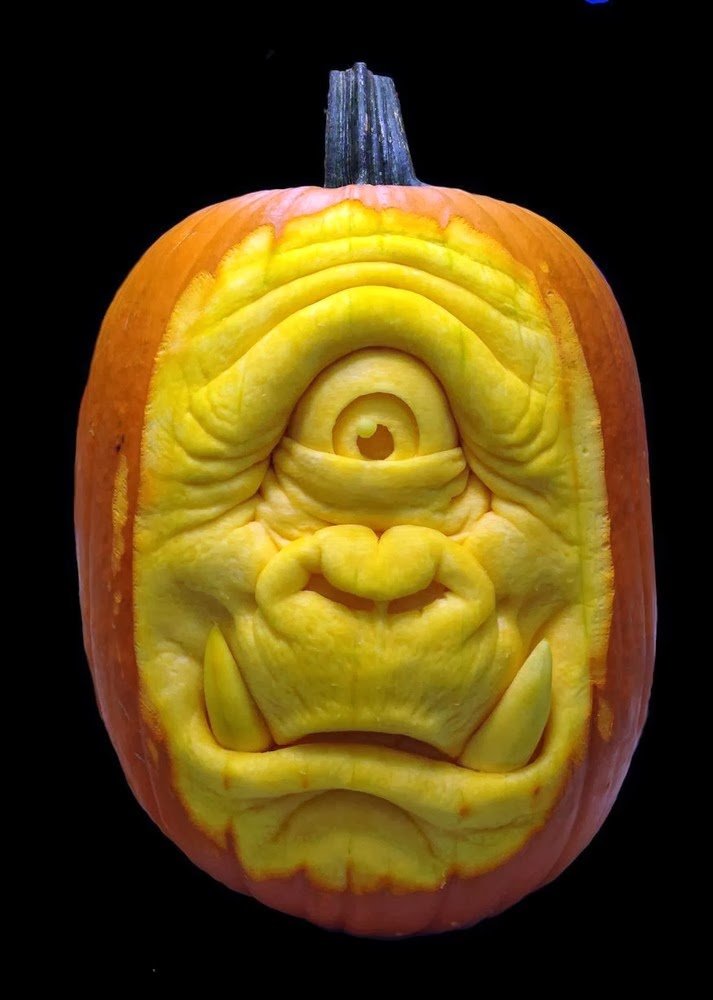
Shocking Facts about Halloween

With the loving approval of their parents, children dress up in weird costumes and play pranks on Halloween night-little realizing that for over a thousand years this one evening in the year has been specially dedicated by spirit mediums and witches to the worship of Satan.
Halloween has nothing to do with Christianity. It is a festival which no one-child or adult-should have anything to do with. We need to better understand the origins of Halloween and its dangers.
During the Dark Ages, a number of pagan customs were adopted by the dominant Christian church in Europe. One of these was devil night, which was later named, "Halloween." This special night, celebrated since antiquity as the night when the devils came out and walked about the streets, was a satanic festival on October 31 of each year.
The next day was called "All Saints Day" or "All Hallows Day", so "Halloween" was the night before Saints’ day. Like the night before it, All Hallows Day was dedicated to honoring the dead.
1. The first known mention of trick-or-treating in print in North America occurred in 1927 in Blackie, Alberta.
2. Halloween takes place on October 31st, the last day of the Celtic calendar. It was originally a pagan holiday, honouring the dead. Halloween was called All Hallows Eve and dates back over 2000 years.
3. There really are so-called vampire bats, but they’re not from Transylvania. They live in Central and South America and feed on the blood of cattle, horses and birds.
4. Samhainophobia is the fear of Halloween.
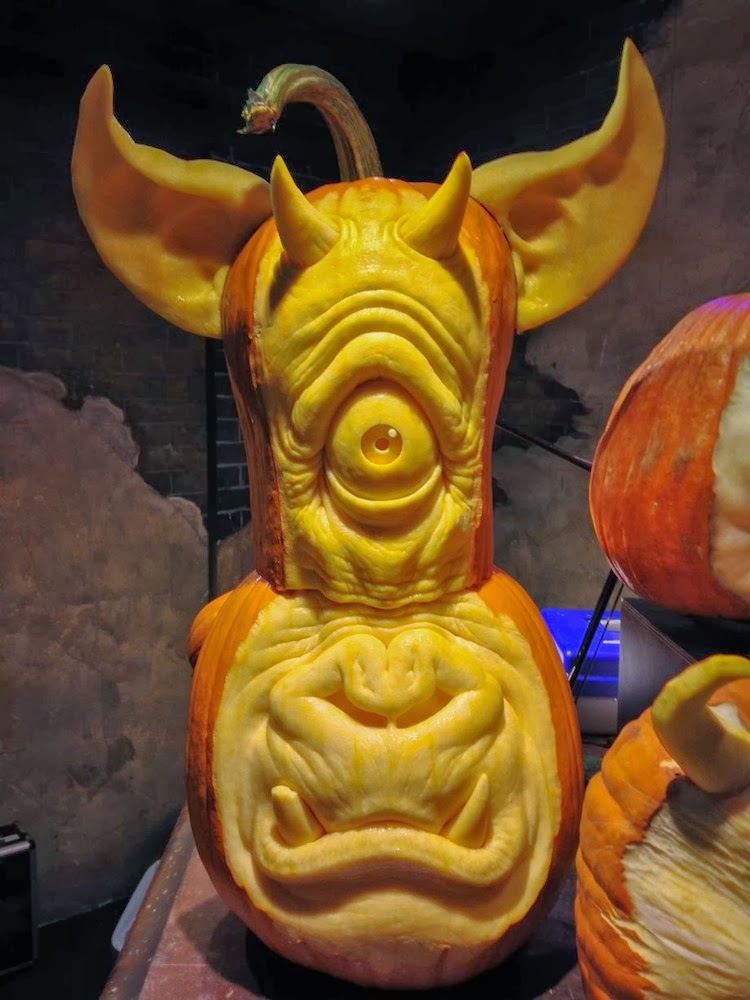
5. Turnip was the vegetable traditionally carved before the pumpkin.
6. The day after Halloween is called All Saint's Day.
7. The Halloween color orange represent the harvest.
8. You wear masks on Halloween to keep the dead from recognizing the living.
9. It take a pumpkin to 90-120 days to grow.
10. Halloween is the third largest US party day of the year and the second Super Bowl Day.
11. Barnbrack is a traditional Halloween fruit cake.
12. Jack O'Lantern is ashifty villain.




Sunday, 20 October 2013
Amazing Chocolate Facts

Cacao and Cocoa
Cacao is the bean that comes from the cacao tree.
Cocoa is often used to describe the refined cacao bean after it has been processed, however the words cacao and cocoa are often used interchangeably in the chocolate making industry.
It is believed that the word cocoa came about as a result of a spelling mistake by European traders.
1. Cacao trees grow beneath the shady branches of taller trees in the rainforest
2. They don’t begin to bear fruit until they are at least three to five years old

3. Cacao trees produce flowers all year round
4. Tiny flies called midges pollinate these small flowers
5. Eventually, cacao pods will sprout from the trunk and branches of the tree
6. Cacao midges have the fastest wingbeat of any creature on earth-1000 beats per second.
7. Cacao midges are so small that they fit easily on the head of a straight pin
8. A cacao pod contains 30-50 almond sized seeds known as cacao beans. One cacao pod contains enough beans to make approximately seven milk chocolate bars
The Mayans
9. Before chocolate was eaten as a sweet, it was a spicy drink. Some of the earliest known chocolate drinkers (250-900 AD) were the ancient Mayans of Central America.
10. The Mayans gathered cacao seeds from rainforest trees and planted them in household gardens. They plucked the pods, scooped out the seeds, and using a stone, they ground them into chocolate. They mixed chocolate with cornmeal, chilli peppers, honey, and water.
11. Mayan priests presented a chocolate drink at sacred altars during special religious ceremonies. When rich Mayans served chocolate they used lavishly decorated cups made by specially trained artists.
The Aztecs
12. The ancient Aztecs got their taste for chocolate from their Mayan neighbours. From 1200 cacao played a key role in the vast trade empire of the Aztec people. Cacao wouldn’t grow on Aztec land, so Aztec traders travelled to Mayan country to buy the precious seeds.
13. Cacao seeds were used as money when shopping at the market for food, clothes, and even kitchen tools and utensils. Some dishonest merchants made counterfeit cacao seeds too!
14. Chocolate was a special drink reserved only for wealthy Aztecs or kings. King Montezuma is reported to have drunk 50 goblets of chocolate a day.
15. The Aztecs presented offerings of cacao to their god Quetzalcoatl, who is often depicted as a feathered serpent.
The Spanish
16. In 1521, the Spanish explorer Hernán Cortés led an army to conquer the Aztec empire. The Spanish victors carried many treasures back home with them, including cacao seeds and the Aztec recipe for the drink. Within 100 years the popularity of hot chocolate spread to the rest of Europe.
17. The Spanish invented a wooden stirring stick called a molinillo to whip their chocolate into a froth. They also added sugar to sweeten the bitter taste.
18. Like the Aztecs, Europeans created special serving dishes for drinking chocolate. In fact saucers were invented specifically to keep chocolate from spilling on fine clothes.
19. Chocolate houses became popular places in 17th century Europe to socialise and drink chocolate. Wealthy people drank chocolate for breakfast. It was considered the height of good breeding to lie in bed and leisurely sip a cup of hot cocoa.
A Bar of Chocolate
20. By the 1800s new processes made it possible to create solid bars of chocolate for eating, not just liquid chocolate for drinking. New inventions, machines, and mass production made chocolate affordable and not just a luxury for the rich.
21. The steam driven chocolate mill, invented in 1732, made it easier and faster to grind cacao seeds and cheaply produce large amounts of chocolate. In 1828 Dutchman Coenraad Johannes van Houten invented the chocolate press. Still used today, this machine squeezes out cocoa butter and makes it possible to produce solid chocolate as well as cocoa powder.
22. From Ghana, then known as the Gold Coast, cocoa beans were dispensed to other countries including Nigeria. From 1911-1976 Ghana was the world's leading coco producer supplying chocolate for most of the growing European market.
23. Ghanaian cocoa growers pooled resources to set up Kuapa Kokoo, a farmers’ cooperative. Kuapa Kokoo trades its own cocoa in order to get a better price on the market for cocoa sold and to improve the farmers’ standard of living.
24. At a meeting in 1997 the farmers decided to create a chocolate bar of their own. With the support of Twin Trading, Comic Relief, the Body Shop and others, the farmers set up Day Chocolate, which later became known as Divine Chocolate.
25. Kuapa Kokoo’s motto is ‘pa pa paa’ which means ‘the best of the best’. You get the best of the best chocolate and the cocoa farmers get a fair and secure price for their crop.
26. One of York’s most famous sons is Joseph Rowntree, a Quaker remembered for his work towards improving conditions of working people and founding the famous Rowntrees chocolate and confectionary company. In 1827 he set up a grocer’s shop, which in time expanded into a chocolate factory, and now many of the sweets and chocolate bars that are much loved in Britain, like Kit Kat and Yorkie, are manufactured in the York factory.
27. York’s other great chocolate name is Terry’s. The firm began in 1767. The Terry’s name first appeared when Joseph Terry became a partner in 1823. At peak seasons over 700 people were employed at the plant to produce world-renowned delights such as Terry’s All Gold. The York factory closed in 2005 and moved its operation to Poland.
Friday, 18 October 2013
FOUL FACTS! YUCK

2. Horses and rats can't vomit.
3. Each foot releases nearly a cupful of sweat every day. If only you could bottle it.
4. Americans call “bogeys” “boogers”
5. The loudest burp recorded (so far) was 107.1 decibels - that’s louder than the sound of a drill breaking up concrete!
6. When you sneeze, the air coming out of your nose and mouth travels at 100 miles per hour-even faster than cars on a motorway.
7. Did you know that you produce more than a litre of saliva every day?
8. Your nose also makes about a litre of slimy glop each day - called mucus. And most of it, you swallow. Eeew!
9. On a normal day, you produce about half a litre of sweat. But if it’s hot and you do lots of exercise, you could produce up to seven litres. That’s three and a half big bottles of fizzywizz!
10. The sweatiest part of your body isn’t your armpits or your feet - it’s the palms of your hands.
11. What’s in a bogey ? Dried mucus mixed with dust and dirt-with a few bugs to add extra flavour!
12. Can you believe it? You’ll spend three years of your life on the toilet.
13. You produce about 45,000 litres of urine in a lifetime-enough to fill 450 baths.
14. Romans used to brush their teeth with urine.
15. Ever tried beetroot? If you eat too much of it, your wee will turn pink!
16. When an astronaut spacewalks on the moon, he wears something called a Maximum Absorption Garment. Sounds grand but it’s really a man-sized nappy.
17. Long ago in the Fourteenth Century, it wasn’t cool to wash, so people sprayed on lots of perfume to cover their stinky smell instead.
18. When you die, your skin shrinks and this makes your nails and hair look as though they’re still growing. scary!
19. Ancient Egyptians used to cut open a dead body, remove the insides and place them in a jar next to the coffin. Then they made a mummy by bandaging the body up in strips of linen.
20. Whenever you talk or chew, little clumps of earwax fall out of your ears. Luckily, they are too small to see.
Wednesday, 16 October 2013
TERMITE FACTS

2. Termites are found in every state in the United States except Alaska.
3. Termites feed on cellulose, which can be found in high moisture wood.
4. Americans spend more than $5 billion every year treating for termites and repairing the damage they cause.
5. Termite damage can go undetected for years.
6. Termite damage is not covered by most homeowners’ insurance policies.
7. Some termite species need only a space one-sixteenth of an inch wide - the thickness of a piece of paper -to enter a home.
8. Signs of a termite infestation include wood damage, such as small holes in wood; crumbling drywall; sagging doors; swarms of termites (usually occurring in spring); and piles of discarded wings.
9. There are five major types of termites throughout the United States: Eastern Subterranean termites, Western Subterranean termites, Desert Subterranean termites, Formosan Subterranean termites and Drywood termites.
10.Termites are secretive, so finding them is not always easy. They often live in out-of-the-way places where they silently eat wood from the inside out. By the time you have discovered you have termites, some damage has usually been done.
11.There are over 2,600 species worldwide. Only about 5% are significant pests to structures.
12.Dampwood termites typically infest damp and decaying timber. They live in moist wood and do not require soil contact. Dampwood termites produce fecal pellets that are an indication of infestation.

14.Termites cause more damage than tornadoes, hail storms, wind storms, and hurricanes combined.
15. Termites have been around for more than 240 million years. They adapt to ever changing environments. Termites are natures way to break down wood and return it to the soil.
16. Termites can not determine the difference between the wood in the forest where your home was built and the wood members of your home.
17. Termites can infest almost every part of your home.
18. Termites can enter your home through a crack or opening as thin as a piece of paper.
19. Termites never stop working and eating. They work 24 hours a day.
20. Termite colonies can average more than a million termites.
Subscribe to:
Posts (Atom)


